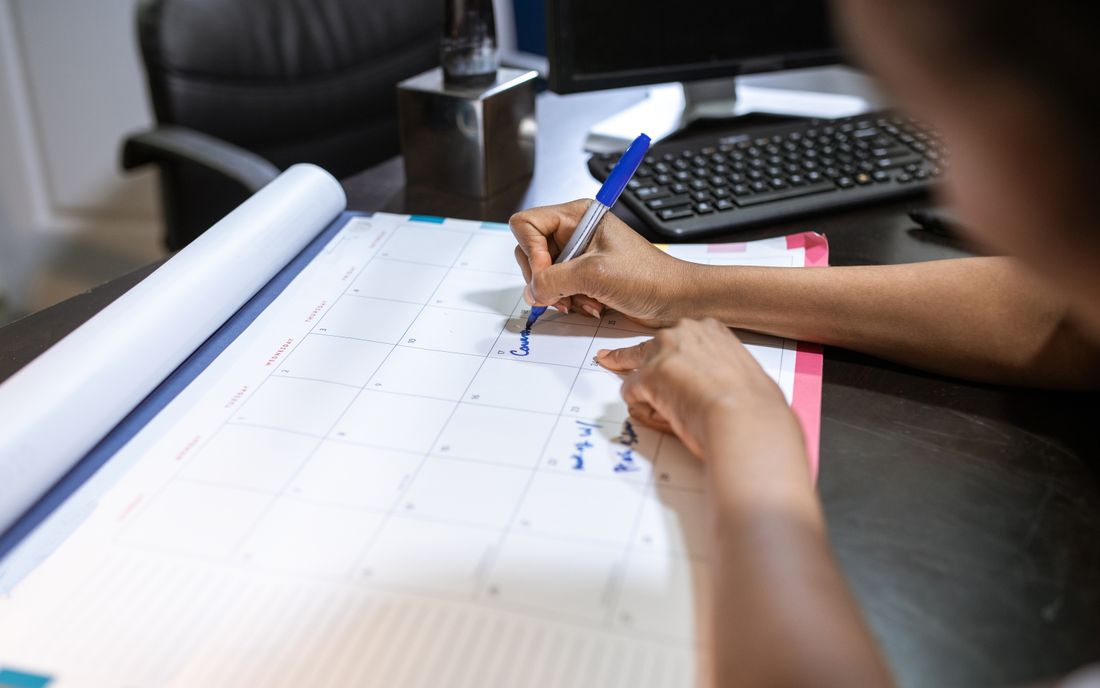
Moving to continuous counting
Moving to continuous counting: a little counting every day reduces the need for one big yearly recount and lets you catch errors earlier.
Stopping the whole shop once a year to count everything is hard on everybody. The team gets tired, sales are lost, and the errors that built up over twelve months come out in a single day. Finding their causes is then almost impossible: nobody remembers where a receipt document went or who returned what and when. Continuous counting takes the opposite route: each day it counts a small number of positions and over the year goes round the whole range several times.
Why it works
First, an error is found while it is fresh. Checking yesterday's receipt or last week's return takes minutes, while digging through a year of documents takes days. Second, the load is spread evenly: the shop does not close and nobody stays the night. Third, staff get used to counting and speed up. Fourth, repeating causes become visible: if a difference keeps appearing in one supplier's goods, the problem is clearly at receiving.
Starting: the zero point and groups
Continuous counting needs a clean starting point. Otherwise the positions you count every day collide with old errors and mislead you. Hold one full recount, analyse the differences, correct the balances and declare that date the "zero point". After that you can move to small daily counts.
How often you count depends on the value of the goods and how fast they turn over:
- group A: the most expensive and fast-moving positions. Once a month;
- group B: middle value. Once a quarter;
- group C: cheap and slow. Twice a year.
An illustrative example: a shop has 1,500 positions, of which 120 are in group A, 480 in B and 900 in C. A month has roughly 22 working days, so A needs 120 ÷ 22 ≈ 5 to 6 positions a day. For B a quarter has 66 working days: 480 ÷ 66 ≈ 7. For C half a year has 132 working days: 900 ÷ 132 ≈ 7. In all, 19 to 20 positions a day. That is under half an hour for one person, and the whole range is still checked at least twice a year, with expensive goods checked twelve times.
The daily list and routine
The list comes from three sources:
- By plan: the next positions from the group table.
- By signal: a negative balance, goods after a large receipt or return, a position whose price has changed, an item a customer "could not find on the shelf".
- At random: three to five positions as a control, even if everything looks fine.
Take the list from Excel or the accounting program, but do not show the booked balance to the counter.
Count before the shop opens or after it closes, when goods are not moving. The counter works down the list, counts on the spot and writes it down. If there is a difference, another person recounts that position. If the difference is confirmed, look for the cause the same day: open yesterday's and last week's documents. Make the correction only through a document that states the reason. Put everything in a log: date, position, books, actual, difference, reason, signature.
Rotate the counters: if one person always counts the same shelf, their eye gets used to it. The responsible employee should not count their own zone alone; put another person beside them.
How to measure the result
Three indicators are enough. The first is accuracy: in what share of counted positions was there no difference. Suppose 410 positions are counted in a month and 369 match the books: 369 ÷ 410 = 90 per cent. The second is the value of the differences in so'm. The third is the three most frequent causes. If accuracy rises month by month, the system is working. Once the figure stays high, group C can be checked less often. If a cause repeats, change the process: for example, if differences appear in one supplier's goods three weeks running, tighten the receiving rule so that goods are counted before the receipt is entered in the document.
When a full recount is still needed
Continuous counting makes the big recount smaller and easier but does not abolish it. When you change the accounting system, change the responsible person, close a branch or reach year end, a full confirmation agreed with the accountant is still needed. Even then, working from tidy balances is much easier.
Conclusion
For many shops continuous counting starts as a small habit: about twenty positions a day. Pereuchet carries out the initial full count and, where useful, periodically checks the most expensive or most often missing groups on a selective basis, while your own team keeps the daily routine going.