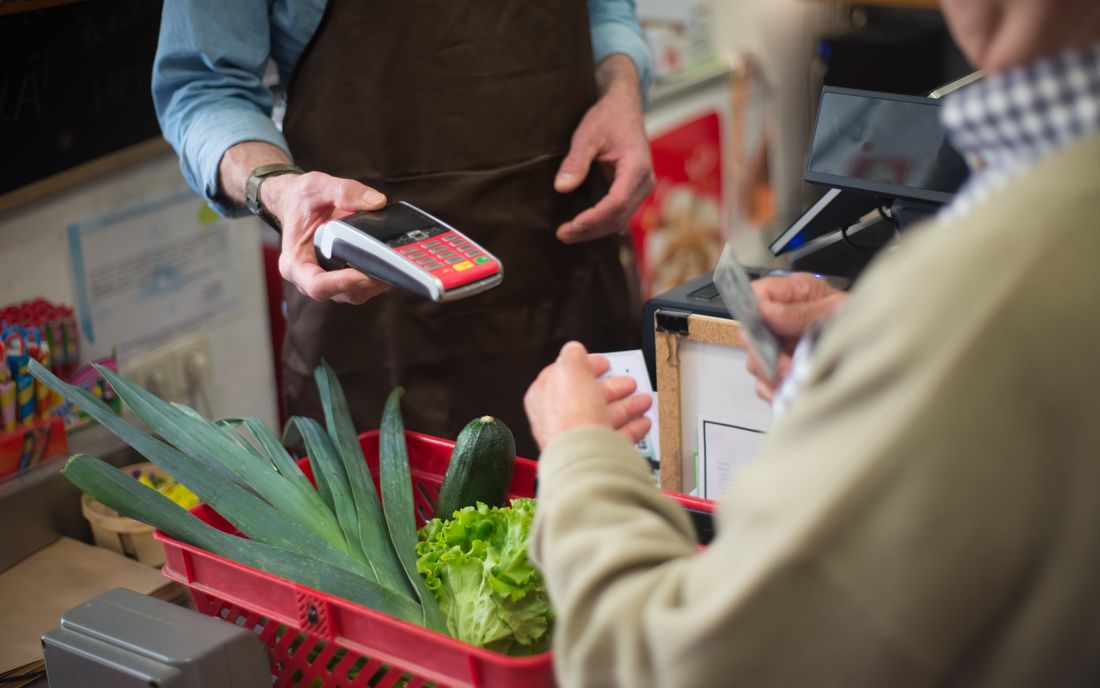
The till cut-off: marking the sales boundary
Stopping the till and recording the time of the last receipt ties the booked balance and the physical count to one moment, so the result can be defended.
A count is like a photograph of something that moves, and a photograph must carry a date and time, otherwise comparing it with the books is meaningless. Stopping the till and marking the last receipt is what puts that timestamp on it. From that moment the booked balance is "frozen", and the result of the count is taken to belong to that very moment. This small step is often forgotten or written down as "around nine in the evening". Afterwards you can prove neither that a shortage exists nor that it does not.
Why the till, and when
Everything that changes a balance passes through one point: sales, returns, deliveries, transfers. The till is the quickest of these and the one whose time is recorded most exactly. That is why the sales boundary, the cut-off point, is usually taken at the till. But the boundary is not only about receipts. Delivery notes, wholesale dispatches and online orders must also be tied to the same moment. If the till has stopped while deliveries keep being entered in the accounting program, the boundary means nothing.
The easiest time is at the end of the working day, once customers have left. If the count starts in daytime, give notice 15 to 20 minutes ahead so the queue can be served, and put a sign on the door: "Till closed after 14:00". In a small shop that keeps its takings in a notebook the routine is the same: draw a line under the last entry, write the time and sign it.
What to write down at the cut-off
As soon as the till stops, record:
- The hour and minute. Take the time from the till display, not from a phone.
- The number of the last receipt. If trading continues, also note the number of the first receipt after the cut-off.
- The shift-closing report: takings, cash, cards and electronic payments.
- The report of balances taken from the accounting program at that minute. Save it as a file and print it.
- The cash in the till, counted by hand.
These five items go on one sheet, the "cut-off certificate", signed by the cashier and the accountant.
The certificate need not be long. For example: "12 November, 20:40. Last receipt No. 2381, shift No. 57 closed. Takings: cash 3,450,000, cards 2,910,000 so'm. Report of balances taken at 20:41. Cash in the till 4,570,000 so'm, counted by hand. No open receipts." The cashier, accountant and coordinator sign below. Such a sheet later links the count result to the figures in the books and answers the question "what happened that day" in a minute.
Sales stuck halfway or still running
At the cut-off some sales are unfinished, and they cause the most confusion:
- a receipt on hold: the customer chose the goods but has not paid;
- goods paid for in advance but not yet collected;
- goods put aside for a customer;
- an order packed for delivery that the courier has not yet taken.
The rule is simple. Goods that have gone through the till and been paid for count as sold, even if they still sit on the shelf: move them to a separate place with a "sold, not handed over" label and keep them out of the ordinary balance. Goods that have not yet gone through the till are counted on the shelf and stay in the books. Close or cancel open receipts before the cut-off.
Not every shop can close its door. A boundary is still needed: at the cut-off, close the shift and open a new one. Later receipts then separate themselves under a different number, and you will not mix them with the receipts from before the cut-off. If goods leave an already counted zone, write them on a separate list.
Common mistakes
- the boundary is set "roughly": "somewhere around nine";
- the time comes from the participants' phones, not from the till;
- the supplier's van unloads after the cut-off and the goods get booked in;
- staff take goods for themselves and ring up the receipt later;
- a Telegram channel or online shop keeps taking orders.
For the last point, post a note in the channel or on the site at the cut-off: "orders will be taken from the morning".
Conclusion
Stopping the till takes two minutes, yet the reliability of the whole count rests on it: one moment, one receipt number, one certificate. The Pereuchet team records the cut-off time from your own till and hands over the count result tied to exactly that moment.