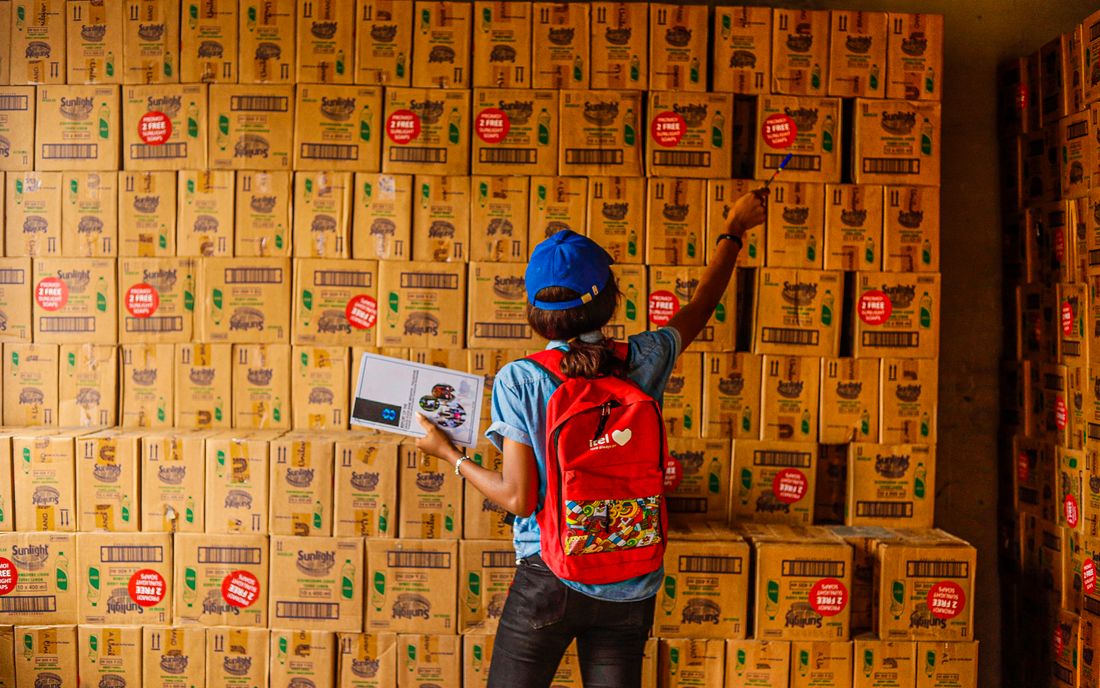
What a recount is and why it is a big event
What a recount is: counting all of a shop's goods at once and comparing the result with your records, which is why it needs planning and the whole team.
People mean different things by the word "recount" (pereuchet) in shops. For some it is a quick count of two shelves; for others it is the day with a "technical break" sign on the door and everyone counting until late in the evening. In fact a recount means counting all of a shop's goods at once and comparing the result with the balances in your records. Everything rests on two words, "all" and "at once", which separate a recount from an ordinary check and turn it into an event for the whole team.
How a recount differs from an ordinary check
In a selective check you count a few of the most expensive or most frequently missing groups. That is useful, but it does not show the overall picture. A recount works differently:
- every position is counted: on the shelf, in the back room, in the warehouse, in the display case and in the box of returns;
- the result is tied to one date and time, for example "as of 21:00 on 15 October";
- the actual quantity is compared with the records in 1C, Excel or a notebook;
- the output is a list of discrepancies: shortages (the records show it, the shelf does not) and surpluses (the records do not show it, the shelf does).
A surplus matters as much as a shortage. Most often it means the goods were booked in under the wrong card, or that a shortage is hiding in another position.
Why it is a big event
The first reason is that goods move. If you count one rack on Monday and another on Wednesday, sales, deliveries and transfers happen in between and there is no longer a single "date". So everything has to be counted at the same moment, which means gathering many people at once.
The second reason is that sales stop. Say a shop takes 10 million so'm a day over 12 opening hours. Close for six hours and you may lose about 5 million so'm of takings. Your own figures will differ, but the logic is the same: every hour has a price, so a recount started without a plan is expensive.
The third reason is that everyone takes part: sales staff, the cashier, the storekeeper, the accountant and the owner. If each person has no clear role, the count turns into a crowd.
Who is responsible for what
- The person in charge (owner or manager) sets the date, scope and rules and takes the final decisions.
- The accountant closes the documents before the count and exports the report of balances.
- The counting team counts the goods and fills in the sheets.
- The storekeeper and sales staff put the shelves in order and answer questions, but do not count their own zone alone.
The last rule is a matter of principle: the person responsible for the goods should not be the only one counting them. Otherwise, when a shortage appears, they have in effect checked themselves.
The stages of a recount
- Set the date, scope and participants.
- Close the documents: receipts, issues, returns and transfers.
- Tidy the shop and warehouse and divide the space into zones.
- Count, with a separate sheet for each zone.
- Recount the positions with discrepancies.
- Reconcile with the records and draw up a signed certificate.
- Correct the balances and work out the causes of the differences.
When to do it and what you get
Usually at least once a year, and in many shops before and after the season as well. Other reasons include a change of the person accountable for the stock, rising shortages, a move to a new accounting program, opening or closing a branch, selling the business or bringing in a new partner.
A good recount gives you three things: confirmed balances, a list of discrepancies and a basis for decisions. The first lets you carry on in your accounting program with exact figures. The second shows shortages and surpluses position by position. The third helps you see where the gap came from: an error in a delivery, a wrong price, losses or plain carelessness. There is no need to look for someone to blame yet; first see the whole picture.
Conclusion
What makes a recount hard is not the counting itself but the preparation: a well-prepared count can take half the time. If your team cannot spare the time, the Pereuchet service takes over counting with scanners, rechecking the positions with discrepancies and handing over the result as a file for Excel or 1C together with a signed certificate.