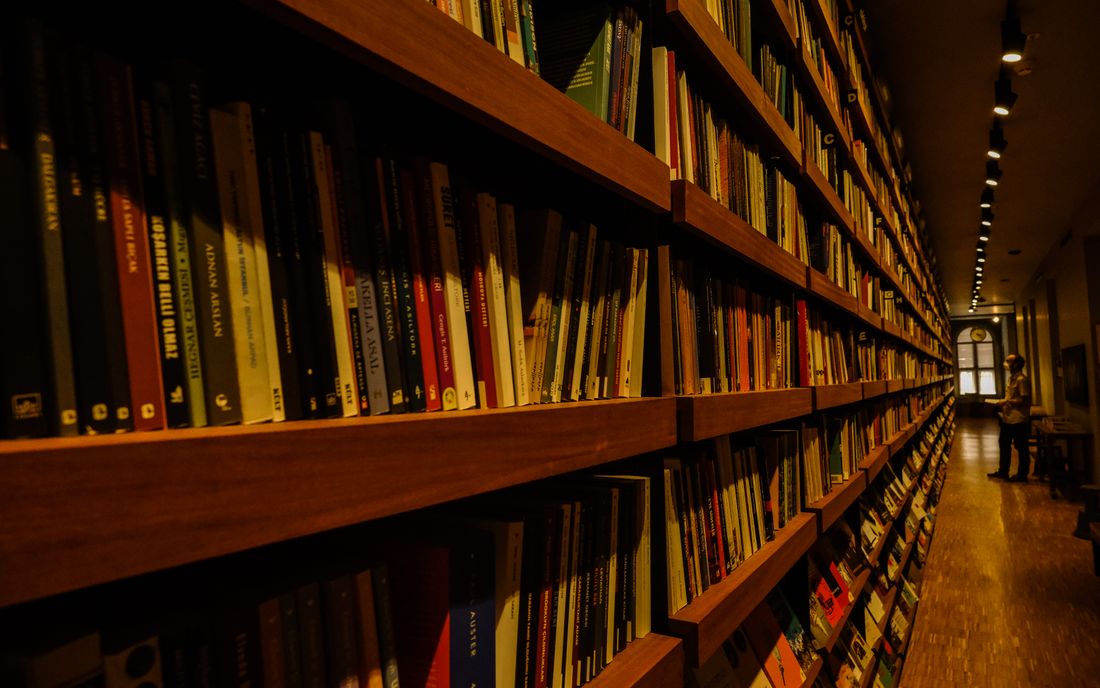
Recounting in a bookshop: editions, ISBN and consignment titles
In a bookshop the unit of counting is the edition, not the title: scan by ISBN, set consignment books apart and note the condition of every copy.
A bookshop carries a huge range, but each title is held in only one or two copies. The spines on the shelves look alike, dozens of books by one author stand side by side, and a single work may exist in several editions. For that reason "a book" or "a title" cannot serve as the unit of counting in a bookshop. The exact unit is the edition: a specific title, language, script, binding and year. Let us look at a routine built on that idea.
ISBN: the book's barcode
Most modern books carry an ISBN and a barcode on the back. The number is assigned to each edition separately. So the hardback and paperback of one work, and also its reprint, become different rows in the books. If you count with a scanner they do not get mixed up. When counting by hand the counter should not write by title but should enter the ISBN or scan the barcode.
In Uzbekistan one work often appears in Cyrillic and in Latin script, as well as in Russian. These are three editions, that is, three positions. The counter must not treat them as "the same book" and add them into one row.
Example: the books hold two cards for one novel, the Latin-script edition with 5 copies and the Cyrillic edition with 3, 8 in all. The count finds 3 of the Latin edition and 5 of the Cyrillic, again 8 in all. Counting by title shows no difference. Counting by edition gives −2 for Latin and +2 for Cyrillic. That is not a shortage: the editions were swapped at the till. If their prices differ, such a swap shows up in money terms too.
Books without an ISBN
Older editions, books from small printers, exercise books and some children's titles may have no ISBN. Give them an internal code: write a number on a small sticky label and stick it inside the front cover. The code should match the card in the accounting program. Put an unlabelled book in an "unidentified" box and sort it out later.
Consignment books
Many bookshops take books on consignment from a publisher, an author or a distributor: unsold copies go back, and sold ones are paid for. Such books do not belong to the shop. Enter them on a separate list and group them by supplier. The count will show two things: how many copies are there and for which of them the return date is approaching. Copies past the deadline are often forgotten, and the shop is later forced to pay for them. Give the list columns for supplier, edition, number of copies, date received and return deadline.
The routine on the shelves
Count the shelves section by section: fiction, children's books, non-fiction, textbooks and dictionaries. Walk each shelf from top to bottom and left to right, put each counted book back in its place and do not carry it to another shelf. Otherwise one book is counted twice or not at all. Mark boxes on the floor and unopened bundles as a separate zone too. Books in boxes are often forgotten because they cannot be seen on the shelf.
The condition of the copies
In a bookshop the same title appears in different states: new, thumbed, with a bent cover, opened for display. Mark the condition in a separate column on the sheet: "A, new", "B, display copy", "C, damaged". Damaged books are counted apart from saleable stock, and a decision is made on them: sell at a discount or return.
Season and stationery
School textbooks and study aids hardly sell through the year, and then demand jumps before 1 September. So count the textbooks before the season and after it: the first count shows how much to order, the second how much is left. Stationery (pens, exercise books, pencils) is sold in packs of 12 or 24. Agree the unit in advance and count opened packs piece by piece. During the count flag editions that have not sold for years as well: separate decisions are made on returning them, discounting them or moving them to a prominent spot.
Conclusion
In a bookshop a position is not a title but an edition. Scanning by ISBN, separating consignment books and noting the condition all improve accuracy. The Pereuchet team counts a bookshop by ISBN, keeps consignment copies on a separate list and hands over the discrepancies as a file for Excel or 1C.