Recounting in a clothing shop: size and colour
Recounting in a clothing shop: one model comes in many sizes and colours, so the unit of counting is the variant, not the model as a whole.
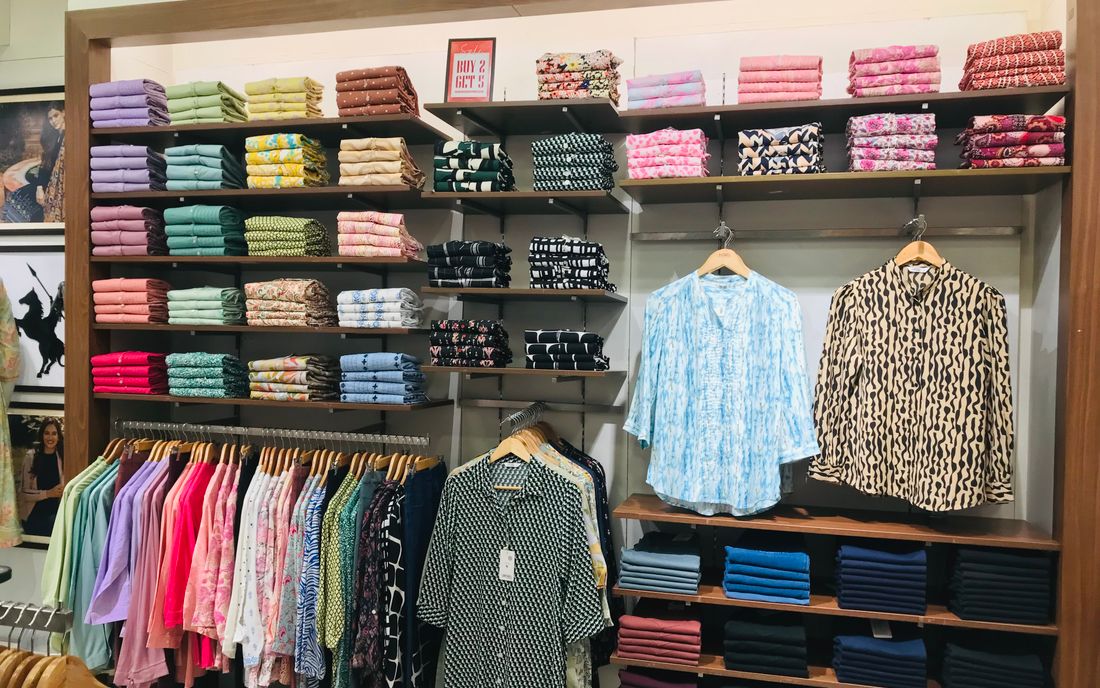
In a clothing shop the difficulty is not the amount of stock but its variety. If one polo shirt comes in 4 colours and 5 sizes, that is not one model but 20 separate variants. Thirty such models make 600 positions, all looking nearly the same on the rails. So "how many shirts are there" is the wrong question. The right one is: which model, which colour, which size, and how many.
The unit of counting: the variant
In clothing the unit of counting is the variant: model, colour and size together. Build the sheet around it: one row for each model and colour, with the sizes (XS, S, M, L, XL) as columns. The counter fills a row in like this: "P-204, black: S 2, M 4, L 3, XL 0". Writing zero is compulsory: an empty cell means "not counted", a zero means "this size is not here". For children's wear the columns are heights (98, 104, 110) instead of sizes, and for shoes they are shoe sizes (36 to 41).
Agree the size scale in advance too. The label on one garment may show the letter M, the number 48 and the number 40. Find out which scale the accounting program uses and write only that on the sheet, otherwise one size ends up in two columns.
Before the count: rails and cards
Counting by variants is slow on untidy rails. The day before, arrange the rails by model, then colour, then size: smallest to largest, always in the same direction. A misplaced item then catches the eye at once. This noticeably shortens the count, and much of the size mix-up is put right before counting starts.
In clothing, two cards are often set up for one variant: "Polo P-204 black M" and "P-204 Polo black M". If goods are received on one and sold from the other, one card shows a shortage and the other a surplus. Before the count, search the accounting program for cards with similar names and merge them, or at least mark them in pairs on the list.
Reconciling on two levels
Compare the result with the books in two steps. First take totals by model and colour only. Then open up the models whose total did not match, size by size. A telltale sign often appears: the total is right, but by size there is +2 in one place and −2 in another. That is not a loss but a mix-up: the cashier scanned the barcode of an L when selling an M, or the wrong label was sewn in. Do not write such paired differences down as shortages. Put them on a separate "size mix-up" list and redistribute the balance.
Where clothes hide
In a clothing shop stock piles up in unexpected places. Before you start, walk round:
- the fitting rooms and their hooks;
- the mannequins and the window display, especially accessories on outerwear;
- goods set aside for customers behind the till;
- returns whose tags have not been updated yet, and items waiting to be pressed;
- items sent for repair or for length alterations;
- unopened packs in the stockroom.
In folded stacks it is the bottom layers that get forgotten. Count a stack by moving it entirely: put each counted item onto a new stack, so you neither count twice nor miss what was at the bottom.
An item with a cut or torn-off tag goes into an "unidentified" box. Describe it by appearance and match it to a model later. For sets, such as a suit, pyjamas or a tracksuit, find out beforehand whether each part is sold separately; otherwise half a set in the books turns into a whole one during the count. Shoes are simpler: a single shoe on display is part of the pair in the box, so it is not counted separately.
What the count gives you besides balances
At the end of a season the count does a second job: it gives a list of models with a broken size run, for example a model that is still in stock but only in XS and XXL. Such models usually sell slowly and are the first candidates for a discount. Read it together with sales: which size runs out fast and which one lingers.
Conclusion
In clothing, accuracy comes from the variant, not the model: model, colour and size. The Pereuchet team counts a clothing shop by variants, shows differences by model and size, and hands over the result as a file for Excel or 1C.