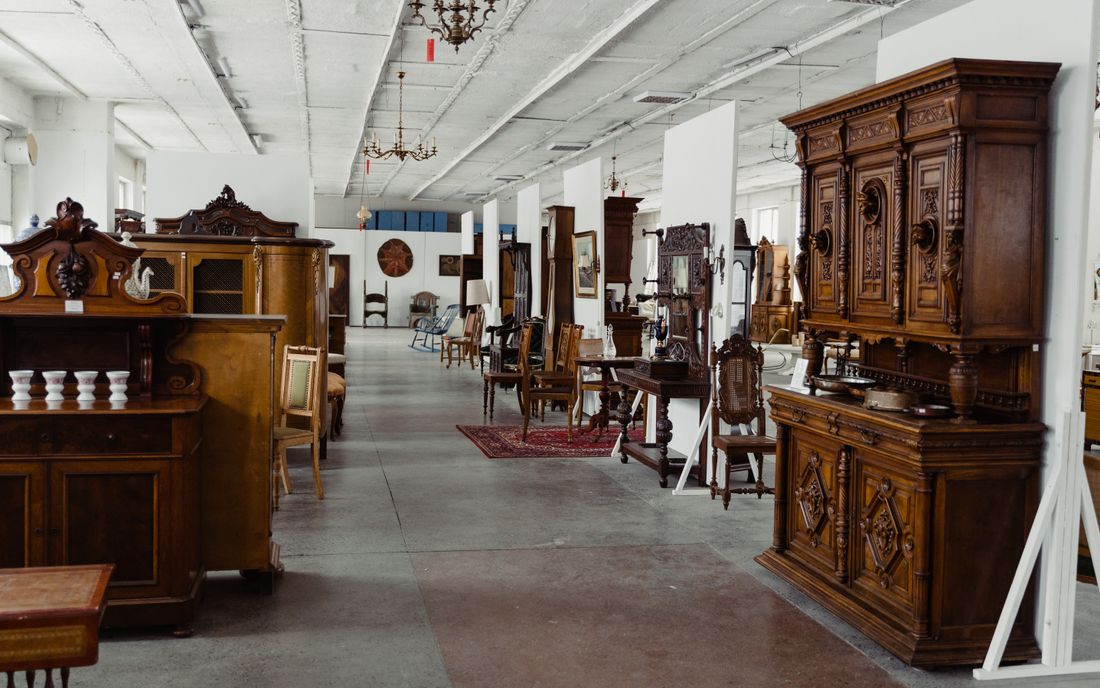
Recounting in a furniture showroom: samples, sets and orders
In a furniture showroom count the boxes first and then assemble sets, keep floor samples apart from stockroom units, and list sold but undelivered furniture separately.
A furniture showroom has few positions, but every unit is large, costly and takes up a lot of room. One sofa is packed in two or three boxes, a wardrobe consists of several modules, a sample stands on the floor and the same model lies sealed in the stockroom. As a result the simple question "how many sofas are there?" gets several answers at once. A recount begins by separating those answers.
Floor samples and stockroom units
A sample standing on the showroom floor is stock too, but in a different state: it has been opened, sat on and perhaps scratched. At the end of the season such samples are usually sold at a discount. On the count sheet put the sample on a separate row from the sealed unit in the stockroom: "floor sample" and "in stockroom, sealed". Mark the condition of the sample as well: new, scratched, needs repair. Then the discount list is ready together with the count. When a sample is sold, the books should show which unit left, the floor one or the stockroom one. If they are mixed up, the floor sample is gone while the books still list it.
Sets and boxes
Large furniture usually arrives in several boxes: a sofa in three, a corner wardrobe in five. In the books this is one position, a set. So in the stockroom you count the boxes first and then assemble them into sets. Stick a label on every box: the name of the set, the article number and the box number, for example "2/3".
Example: the books show 6 sofas. In the stockroom there are 6 boxes numbered 1, 6 boxes numbered 2 and only 4 boxes numbered 3. So the complete sets ready for sale number 4, not 6. Two sofas lack their third box: it may not have arrived, may have been sent by mistake, or may sit in a floor sample. Until that is cleared up, telling a customer "the sofa is in stock" is risky.
Sold but not yet delivered furniture
Showrooms often hold furniture that has been paid for but not yet delivered. Physically it lies in the stockroom, but it belongs to the customer's order. Place such items in a separate zone and keep them on a list with the order number and delivery date. Floor samples tagged "sold" should be on this list too. Otherwise in the count they look ready for sale although they have already been sold.
Made-to-order furniture
Some furniture is made at the factory only to order: the customer chooses the colour, fabric and size. If it has not arrived, it is not in the balances. If it has arrived, it is for the customer and not meant for sale. During the count keep the list of orders in front of you and check every item in the stockroom against it. An item missing from the list is a reason to look for the cause, not a spare surplus.
Damaged and returned furniture
Large items get scratched in transport and have corners chipped, which is invisible without opening the box. Move damaged furniture that came from the factory or was returned by a customer to a separate zone, photograph it and record the condition. One of three decisions is made on it: return to the supplier, repair or sell at a discount. Until a decision is made it is not part of saleable stock.
Hardware, fabrics and mattresses
A furniture showroom has small goods as well: handles, legs, sets of screws, fabric samples and catalogues. Count hardware by the packet. Mattresses are grouped by size (for example 90×200, 160×200, 180×200 cm), and each size is a separate position. Fabric samples and catalogues are not for sale, but list them too: losing them is also a cost.
A map of the stockroom and moving things
If large furniture is moved during a count, putting it back takes a long time and the boxes get damaged. So draw a map of the stockroom before the count: what stands in which row and on which tier. Counters should write from the label without shifting the box. Heavy items are moved by two people only.
Conclusion
Counting in a furniture showroom depends on assembling boxes into sets correctly, separating samples from stockroom units and keeping sold but undelivered furniture apart. The Pereuchet team counts a showroom by zones and box labels, shows incomplete sets separately and hands over the result as a file for Excel or 1C.