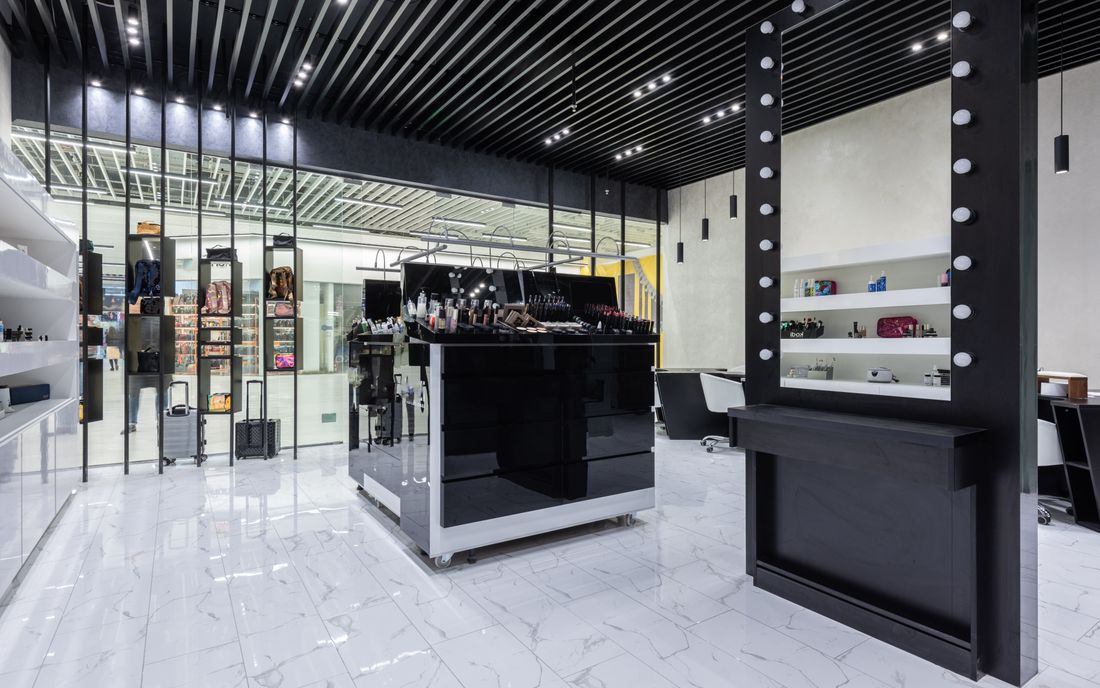
Recounting in a cosmetics shop: small items, many positions
Recounting in a cosmetics shop: there are many small, look-alike items, so counting by code or barcode is far more reliable than counting by eye.
A cosmetics shop has hundreds of small boxes on a single shelf, and many of them look very much alike. Twenty lipsticks from one range differ only in the shade number, which is sometimes printed under the cap or on the back of the box. Counting by eye, the counter mixes the boxes up and, even when counting in groups, slips on the last digits. So there is one reliable way here: counting by code or barcode.
Code, not eyesight
Every variant, meaning the name together with the shade and size, has its own barcode. You can count with a scanner in two ways: scan each box one by one (the most accurate, but slower) or gather identical boxes, scan the code once and type in the quantity. The second way is quicker, but check by eye that the stack holds no similar box with a different code. Without a scanner, sort the products into groups by shade number or code and count the groups. Writing "about twelve" is not allowed.
Two mistakes occur in scanning: a box is read twice, or its code is not read at all. To avoid the first, listen for the scanner's beep and move counted boxes to the back. To avoid the second, put a box with an unreadable code aside and type its code in by hand at the end.
Shades, sizes and gift sets
In cosmetics one name hides dozens of variants: 12 shades of foundation, shampoo in 250 and 500 ml, perfume in 30, 50 and 100 ml. Each is a separate position with its own barcode. Miniature versions must not end up in the row of full-size products.
Gift sets are a separate matter. If a set is one position in the books, count it as one set and do not add the products inside separately. If a set is assembled at the sale (say, shampoo and conditioner), the parts stay separate positions, and their inclusion in the set must be visible on the receipt.
Testers and samples
A tester's barcode is usually the same as that of the product on sale. So during the count it gets mixed with ordinary stock: the books show 20, and the shelf holds 18 new items and 2 testers. Gather testers in advance into a separate box and label it. They do not add to the saleable balance but are kept on a separate list. If someone has opened a new product instead of a tester, or sold a tester, that list is what shows it. Count samples, the free minis, separately too: they are not sold but can disappear unrecorded.
Expiry and the period after opening
Cosmetics also have an expiry date, especially creams, mascara and lip products. The pack often carries an open-jar symbol with a note such as "12M": how many months the product can be used after opening. During the count record the overall date of sealed products and mark separately those with under three months left. An opened, used product is unfit for sale, so set the rule for taking such items off the shelf in advance. A product near expiry is better sold in a set or at a discount than thrown away.
Small, expensive items: the risk
Cosmetics are small, costly and easy to hide. The riskiest places are the shelf by the till, open racks and the perfume section. Put them first in the counting order and, if needed, count twice: at the start and at the end. Reserve stock often sits in the lower drawers of racks or under the counter: include these as a separate zone. Keep the keys to locked cabinets with the coordinator on count day and write down every opening on the sheet. Mark the positions that regularly show differences: at the next count these are the ones to recheck. Value a difference in so'm as well as in pieces: ten units of a cheap product may cost less than one bottle of perfume, and the analysis should start with the expensive ones.
Conclusion
In cosmetics a reliable count rests on a box's code, not its look. The Pereuchet team counts small, similar products with scanners, keeps testers separate and hands over the result as a ready file for Excel or 1C.