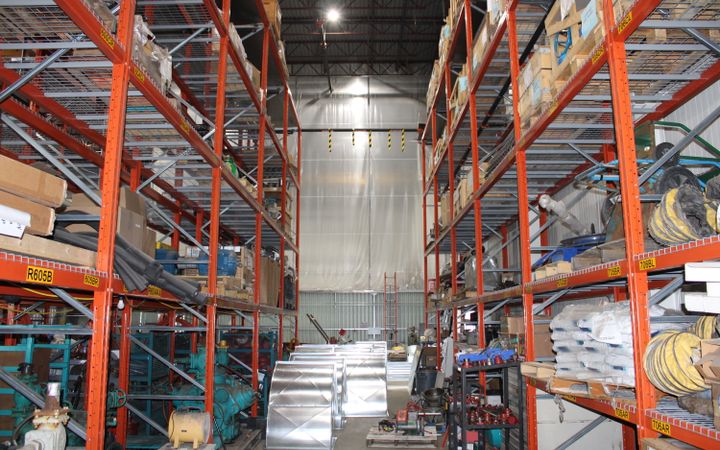
A list of dead stock: a useful by-product of the count
A list of dead stock: during the count only flag dusty, outdated and long-sitting goods, and leave the analysis and decisions for after the count.
During a count all attention goes to the question "what is missing?" But the shelves hide another important piece of information: dead stock. In the books it shows as "available" and inflates the value of the stock, yet in reality it ties up money and takes up space. A count is the cheapest moment to find it, since you pick up every item anyway. The main rule is: during the count only mark things, and leave analysis and decisions for later. Then counting does not slow down and the list is ready afterwards.
Which goods count as dead stock
You need two measures. The first is the time since the last sale. For example: up to 3 months, 3 to 6 months, 6 to 12 months, over a year. The second is the look of the goods: dusty, faded, packaging dented, model outdated, season over. The boundary varies by kind of goods: for school exercise books even six months is long, whereas for winter gloves a summer lull is natural. So for each product group fix your own period in advance and write it on the sheet.
Marking during the count
The counter analyses nothing. They only write a short code or stick a coloured dot on the item, without moving the goods:
- D: dusty, looks as if it has been there long;
- P: packaging damaged or faded;
- O: model or design outdated, season over;
- E: expiry date close or passed.
Writing a code takes two or three seconds. The date of the last sale is in the accounting program, but the real condition of the goods can be seen only on the shelf. When the two sources are joined the list becomes reliable. Explain the codes to the team five minutes before the start and write them at the top of the sheet.
Building the list
Calculate value from the counted quantity only. If the books show 20 pieces with no sales all year, they may not be on the shelf at all: that is not dead stock but a bookkeeping error, and such a position goes on a separate watch list.
After the count, build a table in Excel: item, balance, cost, value (balance × cost), last sale, last receipt, mark, decision. Sort by value in descending order, since you should begin with the biggest sums. An example (figures illustrative):
- exercise book, 96 sheets, old design: 420 pieces × 6,500 so'm = 2,730,000 so'm, last sold 8 months ago, mark O;
- children's toy set with dented packaging: 35 pieces × 54,000 so'm = 1,890,000 so'm, last sold 10 months ago, mark P;
- winter gloves: 150 pairs × 12,000 so'm = 1,800,000 so'm, last sold 7 months ago, mark O.
The three rows together come to 6,420,000 so'm. Suppose the whole list totals 21.7 million so'm against a total stock value of 310 million so'm. That is about 7 per cent: one so'm in every fourteen sits without sales. This percentage becomes the main indicator for comparing later counts.
One decision for every row
Leave no row in the list without a decision. The options are:
- wait: for seasonal goods (winter gloves), with a definite date and condition;
- discount: cut the price in steps, for example 10 per cent, a month later 20, then 30. A price below cost is allowed only with the manager's approval;
- bundle: offer the slow item together with a fast one;
- return or exchange: if the supplier contract allows it;
- another channel: another branch, a Telegram shop or Uzum, where new buyers may be found;
- write-off: only for unfit or unsellable goods, by certificate. Agree the accounting and tax consequences in advance with your accountant.
Besides the decision add a "reason" column: why did it sit? Usually there are several answers: the minimum batch was large, the price was set wrongly, the goods stood on a shelf nobody sees, the season passed. If you record the reasons you will not repeat the same mistake in later purchases.
Conclusion
A useful by-product of a recount is that all the goods pass before your eyes, and marking the slow ones takes almost no time. The Pereuchet team hands over an exact balance file, and if you combine it with the dates of last sales, the dead-stock list comes out in a few minutes.